2560 × 720
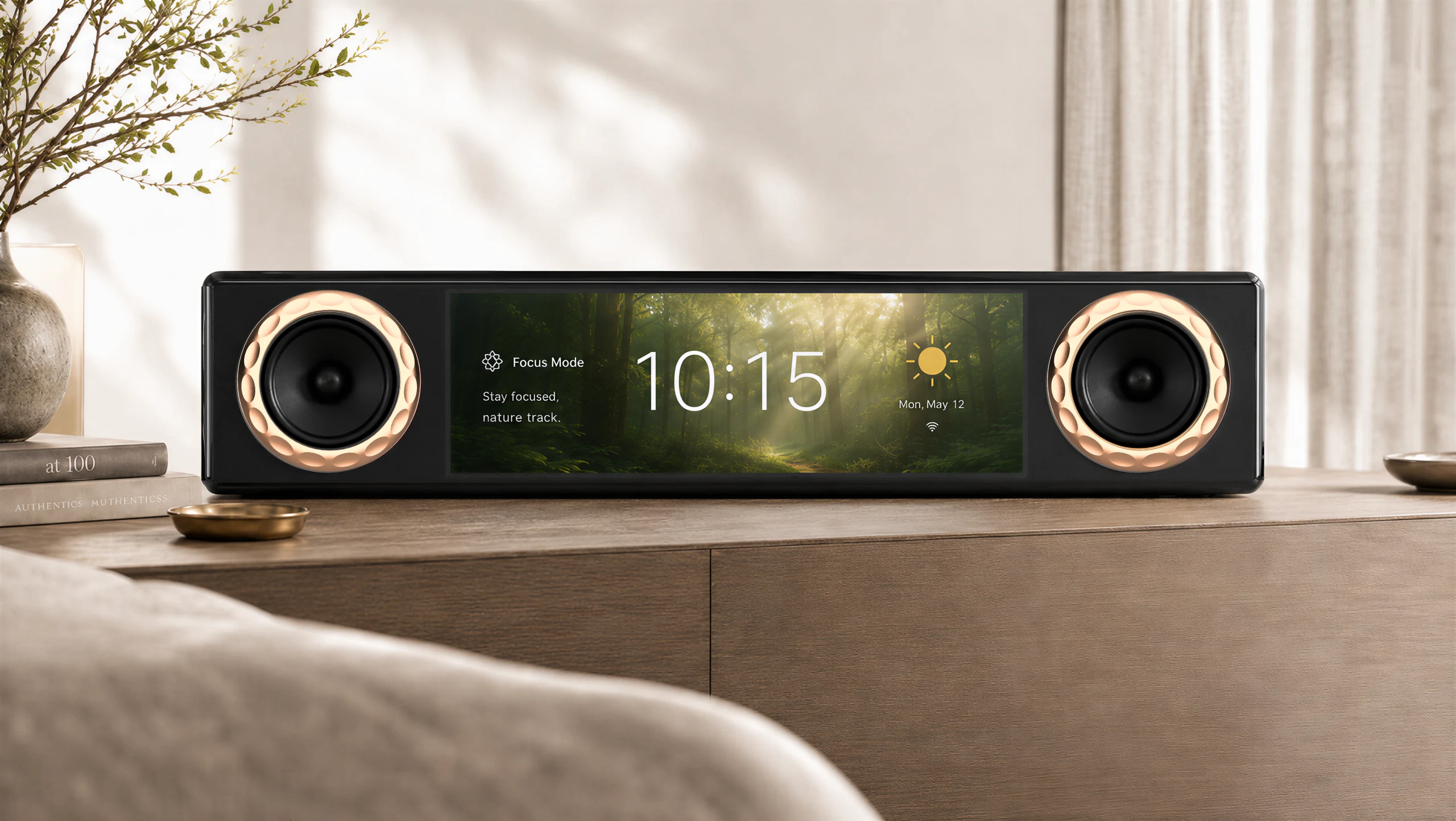
A panoramic interface designed to be read across the room without taking over the wall.
All-in-one Hi-Fi · Ultra-wide ambient display

Calm

Focus

Sleep

Hi-Fi
Calm
Digital music · Explore
Move from discovery to a favorite album without rebuilding your listening habits. Explore brings ten official music web players into one wide-screen gateway, alongside Library, Radio, Spotify Connect, AirPlay, Bluetooth, and DLNA.
Beyond Room Modes
Room Modes shape the atmosphere. Explore opens the catalog: choose a service, sign in with your own account, and keep Tikpal's source and system controls close at hand.
Music services in Explore
Explore opens each provider's official web player. Accounts, subscriptions, catalogs, and regional availability remain with the provider.
Designed for the room
The ultra-wide display sits low and calm in the room, keeping music, time, source, and scene visible without demanding constant attention. Each Room Mode brings back its own visual and listening context, while Auto Night lets the display recede after dark.
A panoramic interface designed to be read across the room without taking over the wall.
Calm, Focus, Sleep, and Hi-Fi each recall their own scene, brightness, timer, and sound context.
Scheduled display brightness helps Tikpal become quieter visually when the room does.
Why Tikpal
Tikpal is designed around a simple idea: listening is never only about a track. It is also about the light, the moment, the furniture, the people nearby, and how easily music can begin.
What you experience
Music starts easily, the display stays glanceable, and the visual scene feels connected to the space around it.
How Tikpal brings it together
The panoramic display keeps controls low and wide, while Room Modes let the whole surface change character together.
What you experience
A familiar system that can feel brighter, warmer, quieter, or more focused without becoming complicated.
How Tikpal brings it together
Calm, Focus, Sleep, and Hi-Fi bring scene, brightness, timer, and playback context into a single choice.
What you experience
A connected musical picture with vocal presence and a low-frequency foundation that gives the room scale.
How Tikpal brings it together
A premium 4-inch full-range driver system is paired with a dedicated 8-inch subwoofer architecture.
What you experience
Less time switching devices and more freedom to move between local collections, radio, connected sources, and streaming services.
How Tikpal brings it together
Explore gathers ten official web players beside Library, Radio, Spotify Connect, AirPlay, Bluetooth, and DLNA.
Made for everyday listening
The working product is already real. The next decisions are better when they are shaped with the people who care about them.
Room-first
Music, time, scenes, and source state remain readable from a distance without asking for a television-sized screen.
Open listening
Tikpal brings personal libraries, radio, familiar connection standards, and ten Explore services into one place.
Made to be seen
A deep high-gloss finish and champagne-gold zinc-alloy trim give the speaker a furniture-grade presence.
Open to ideas
Tikpal welcomes ears, craft, code, content, and practical feedback from people who want to help build it well.
Build together
Tikpal is opening the process to people who care about sound, objects, software, music, and how technology belongs at home. Follow the work, challenge an assumption, or bring a capability we have not met yet.
Sound & acoustics
Help turn a strong driver and enclosure direction into a speaker people want to live with for years.
Design & engineering
Refine the relationship between cabinet, display, materials, controls, serviceability, and manufacturing.
Software, music & reach
Shape smoother playback, richer scenes, better music access, and a community that can grow around the product.
Materials and sound architecture
Tikpal pairs a deep piano-lacquer finish with electroplated champagne-gold trim and a purposeful full-range-plus-subwoofer architecture. Premium international loudspeakers, including KEF, are visual quality references for the finish; Tikpal is an independent product with no brand affiliation.
A polished, furniture-grade surface that gives the long cabinet depth and presence.
Die-cast decorative rings are electroplated for a precise metallic detail around the drivers.
A premium full-range driver system is paired with a dedicated 8-inch subwoofer for scale and low-frequency support.
Product foundation
These details describe the working Tikpal Room shown on this site. Production specifications will be refined through acoustic, engineering, and manufacturing validation.
FAQ
Tikpal is an all-in-one Hi-Fi speaker that combines a panoramic ambient display, four Room Modes, local and connected playback, and Explore access to ten music services.
Not yet. Tikpal is moving from a working product toward broader validation and production planning. Follow the Facebook page to see progress and future availability.
We welcome listeners and collaborators across acoustics, industrial design, manufacturing, software, music, content, community, and distribution. Use the WhatsApp link below to start a direct conversation.
Suno, Spotify, YouTube Music, Apple Music, TIDAL, Qobuz, Deezer, Amazon Music, QQ Music, and NetEase Cloud Music. Each service uses its official web player and may require its own account or subscription.
No. The interface and core experience are running today, while acoustic tuning, engineering details, and production specifications will continue to evolve through validation.
No. KEF and other premium international loudspeakers are referenced only as visual finish benchmarks. Tikpal is an independent product and has no affiliation or endorsement.
Follow Tikpal
Follow new Room Modes, listening sessions, material decisions, software progress, and the practical steps from working product to something more people can own.
Follow on FacebookBuild with us
If you work in sound, industrial design, manufacturing, software, music, content, or distribution — or simply have a thoughtful point of view — start a conversation with Tikpal.
Chat on WhatsApp